

© Moka Studio
Billebecken
Production location close to the city center with recreational value
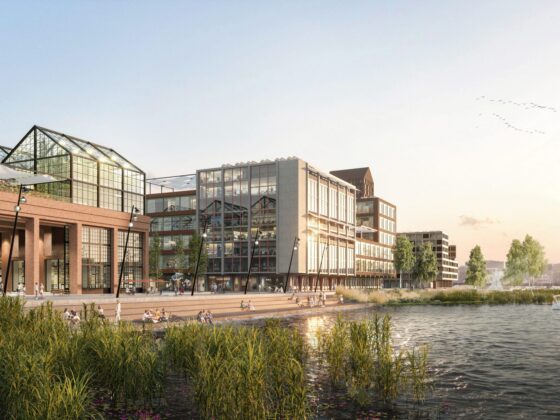
A modern production site is being built to the south of the Bille basin. Multi-storey buildings are being built to provide versatile hall, office and laboratory space. The new riverside promenade with a green riverside park will be an attractive meeting place for employees, visitors and residents. In addition, the central historic building of the redesigned former "Schule am Bullenhuser Damm" can be used for district-related and creative projects.
Current status of development
The Rothenburgsort 19 development plan procedure is currently underway under the leadership of the Hamburg-Mitte district authority. This creates the conditions for further structural development. The aim is to have planning permission ready for 2026. On this basis, construction projects can be initiated before the development plan is finalized.
Parallel to the development plan, the Billebogen Entwicklungsgesellschaft (BBEG) is working on the public infrastructure, in particular on the planning for roads and open spaces.
Marketing of the plots has already begun. The first plot for the Institut für Hygiene und Umwelt was given in 2023.
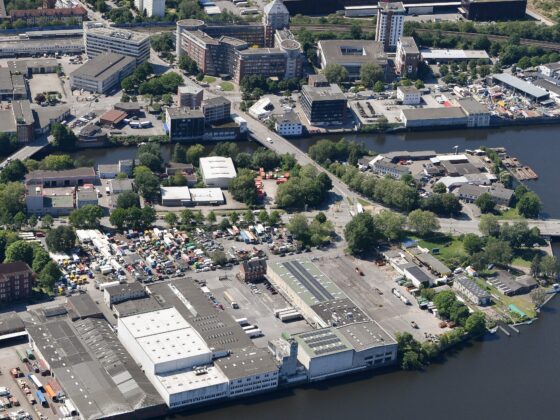
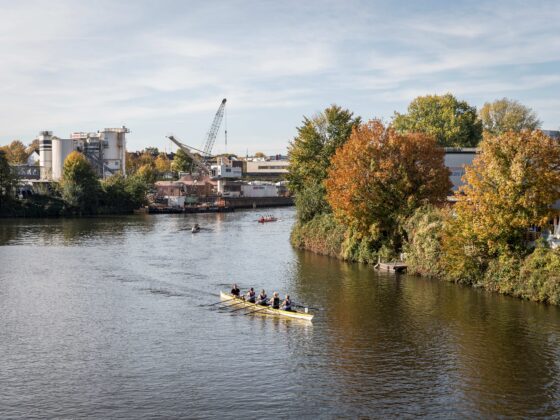
Even a hundred years ago, the urban area south of the Bille basin served as a location for trade and industry. Among other things, the Bille was located here. The companies used the access to the water to transport raw materials and goods as well as for actual production. Billbrook, the adjacent area to the east, has since developed into the second largest industrial location after the Port of Hamburg.
During the Second World War, the once dense, closed building structure was lost. Now, the functional planning for the district is taking up where it left off: The historic structures of the district are being reinterpreted and further developed to meet the needs of the present day.
The basis is the winning design by Lorenzen Mayer Architekten (2021) in an urban and open space planning workshop process. The functional planning was technically supplemented by Atelier Loidl (open space) and Argus Stadt und Verkehr.
The development concept acknowledges the existing buildings, the ownership structure and the companies based in the district. The process of change can therefore take place in stages. Urban properties are available for the first development phase. The urban development target image is an offer to private property owners and shows the complete area development. To this end, the BBEG is in constant dialog with tradespeople and private owners about development opportunities in the district.
Urban development
The Billebecken district is divided into three areas stretching from north to south.
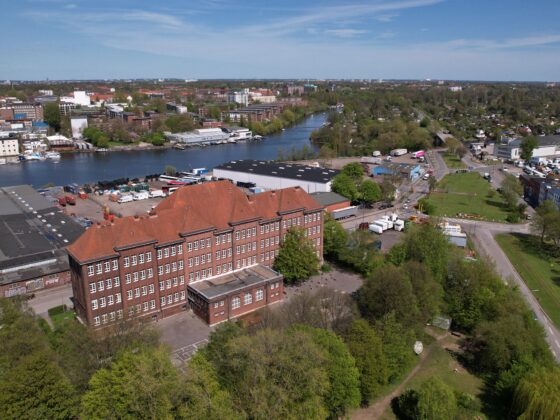
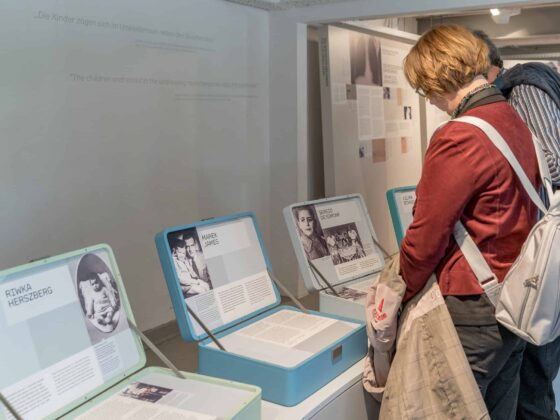
In the center is the listed former school on Bullenhuser Damm. It houses a memorial for victims of National Socialism.
By framing the school on Bullenhuser Damm with closed building blocks, it will be carefully developed into the lively core of the neighborhood.
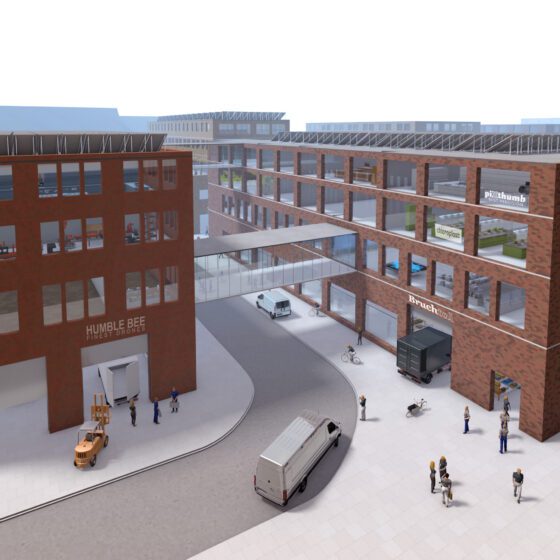
Compact, flexibly designed buildings are planned to the north and south, forming a uniform framework.
In order to support the vibrancy of the district, public and cultural uses are being sought in central squares and promenades or - where available - retained. These include, for example, the water sports clubs on the Grüne Brücke or the vaccination center in the new building being constructed for the Institute for Hygiene and the Environment.
Jochen Stuhrmann
Saving space for sustainable development
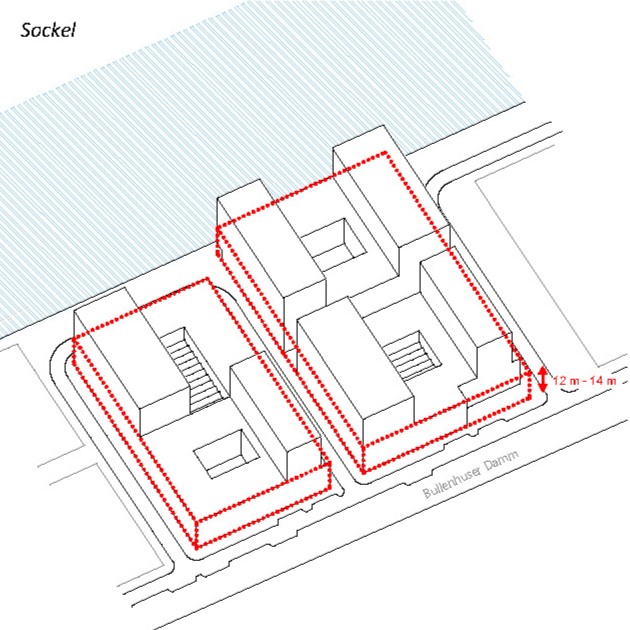
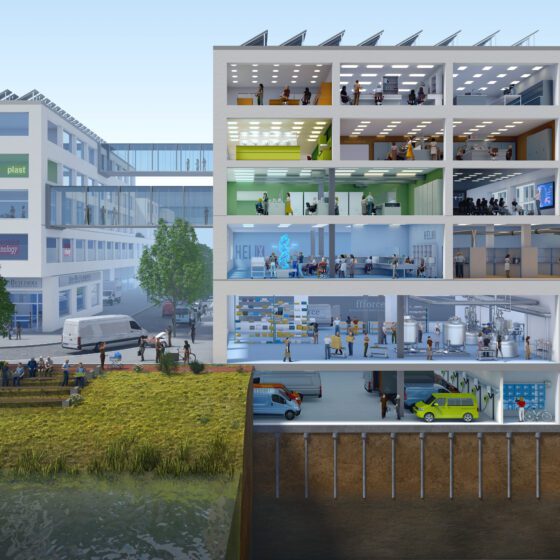
The basic structure of the quarter is based on an efficient concept: production halls, laboratories and office space are stacked on top of each other instead of being spread out. A one- to three-storey base with a height of 12-14 meters is planned for all building plots. Large equipment, storage areas or production lines can thus be easily accommodated. Areas for administration, research and development are arranged above this, but production is also possible on the upper floors thanks to freight elevators.
Together, this results in 5-7 storeys above ground. Three high points of up to 59 meters create additional urban accents at selected entry points to the quarter.

© Billebogen Entwicklungsgesellschaft / Lorenzen Mayer Architects
Flexible for companies
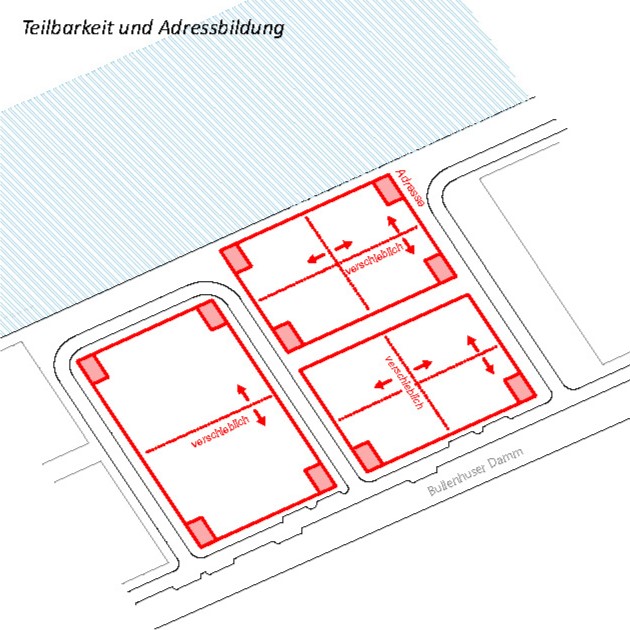
The urban development structure is tailored to manufacturing, processing and research companies. There is a particular focus on medium-sized companies, which have the opportunity to set up their own company property in a central location in Hamburg. The Billebecken is also home to the Gewerbehof, which offers small-scale space for start-ups, scale-ups, makerspaces and creative think tanks. Larger settlements such as the Institut für Hygiene und Umwelt , which has 40,000 square meters of gross floor space, are also possible.
The building volumes can be divided according to use or company size. They can also be merged across construction site boundaries. Real divisions of the construction site are possible for this purpose, as are subdivisions within the storeys. Different functional units on different building plots can be connected with bridges.
Each construction site can also be accessed by heavy goods vehicles. Most of the construction sites are accessed via private roads and factory alleys. This gives companies greater freedom to use traffic areas for logistical purposes.
Jochen Stuhrmann
© Miguel Ferraz
Preserving historical heritage, enabling remembrance
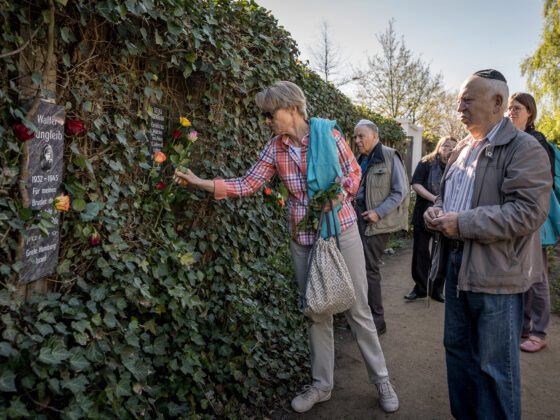
On April 20, 1945, 20 Jewish children and at least 28 adults were murdered in the school on Bullenhuser Damm . Today, the building houses a memorial by the Hamburg Memorials and Learning Sites Foundation in memory of the victims of Nazi crimes. The memorial site also includes a rose garden. Neighbourhood and creative uses are planned for the former school to complement the memorial.
Free space
If you want to explore the south bank of the Bille basin today, you won't get far. Access is severely restricted. The shore areas are largely characterized by fences, walls and technical structures. As part of the district development, the Billebecken can be experienced in a new way. The large water area close to the center will be made more accessible and usable for residents, employees and visitors. The existing recreational use by water sports clubs will be maintained and expanded.
© Moka Studio
Green networks for Hamburg
A continuous, publicly accessible promenade with a near-natural riverside park will be created along the shore. This will create new waterfront pathways through the district. The plans are part of Hamburg's "Green Network" landscape program. These link parks, play and sports areas, allotment gardens and cemeteries through wide green corridors or narrower green links to form a larger whole.
Open spaces for the neighborhood
The near-natural waterside park creates attractive recreational spaces for people working in the district. A central axis leads from Billebecken to the former school on Bullenhuser Damm , thus linking the neighborhood with the water areas. New uses and recreational opportunities are being created along the Bille. At the center of the public promenade is a flight of steps along the banks as a new meeting point at the Billebecken.
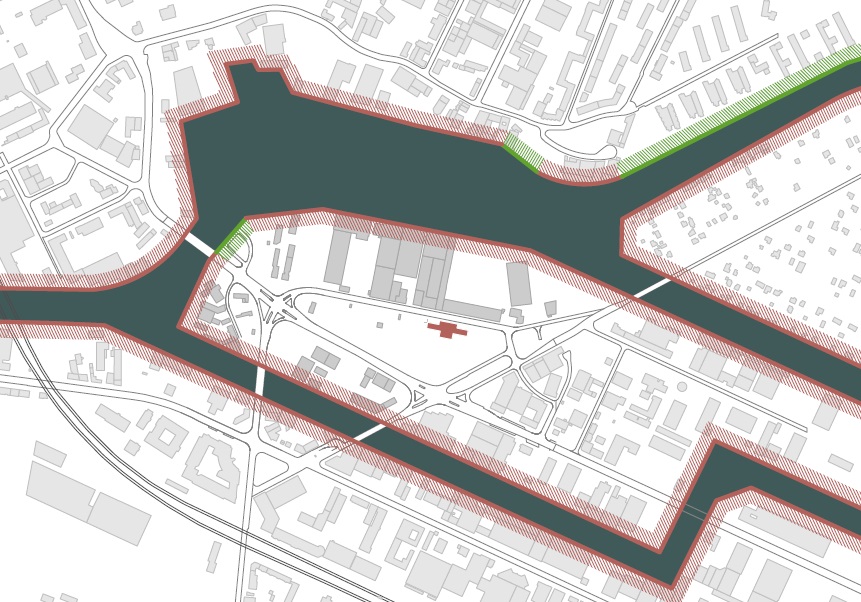
Today primarily hard bank closures (red)
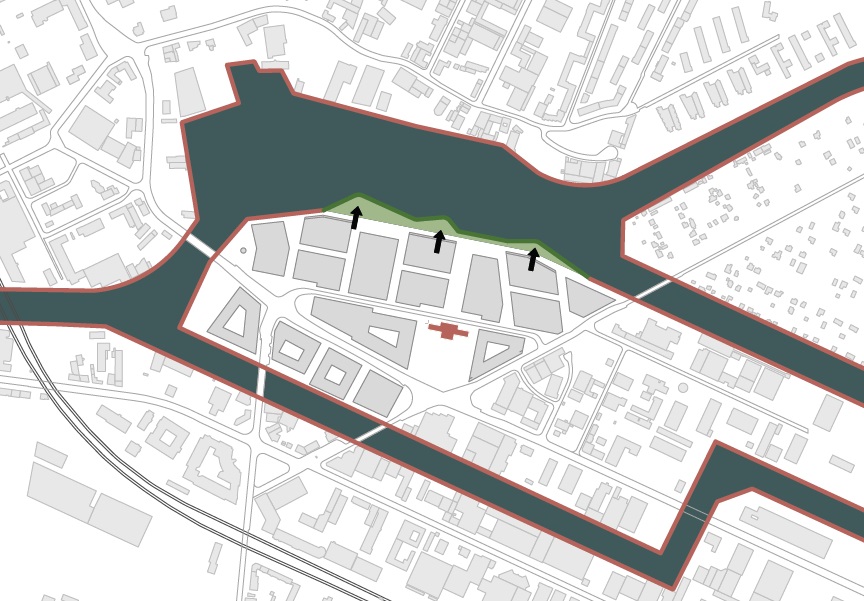
Future gentle embankments (green)
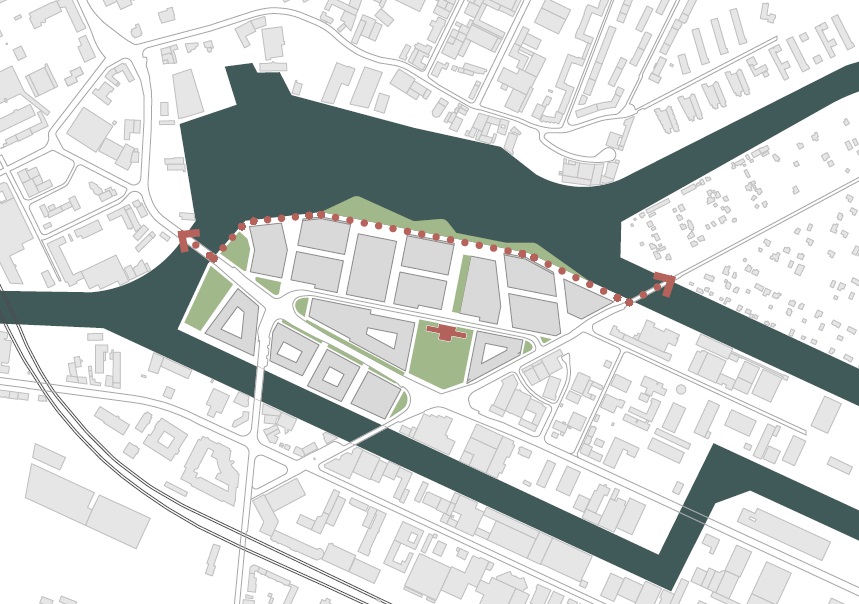
Path connection by the water (red dotted line)
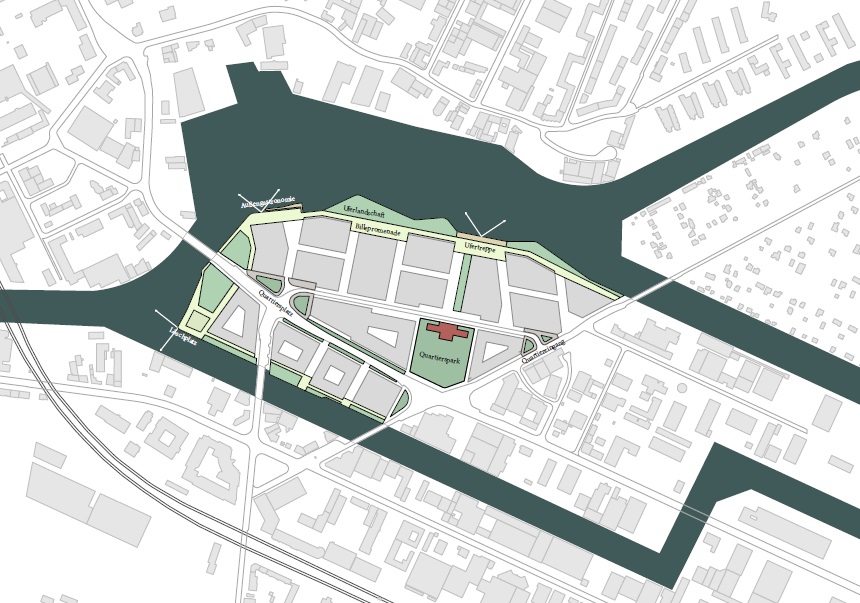
Open space structure in the neighborhood
© Billebogen Entwicklungsgesellschaft / Atelier Loidl
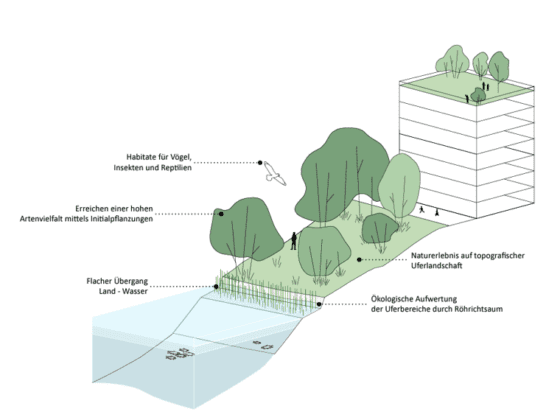
Concept sketch for the backfill
© Billebogen Entwicklungsgesellschaft / Atelier Loidl
An experienceable Bille for nature and people
Hamburg's river landscapes make the Free and Hanseatic City particularly attractive and worth living in. They also provide a near-natural habitat for many animal and plant species. The future riverside park at the Billebecken will contribute to the promotion of river nature. The existing vertical quay walls will be replaced by gentle, flat bank zones. This will enhance the ecosystem of the Bille .
You can find out more about this topic and the large-scale nature conservation project "Hamburg, deine Flussnatur" (Hamburg, your river nature) from the Elbe Habitat Foundation.
Mobility and logistics
The urban redevelopment makes it possible to modernize the street spaces in the district according to current standards. The needs of commercial enterprises as well as those of visitors and everyday users will be taken into account. The aim is to shift passenger traffic to public transport and bicycles as far as possible. The needs of transport logistics are also taken into account: freight traffic can be handled both by road and, in the long term, by water.
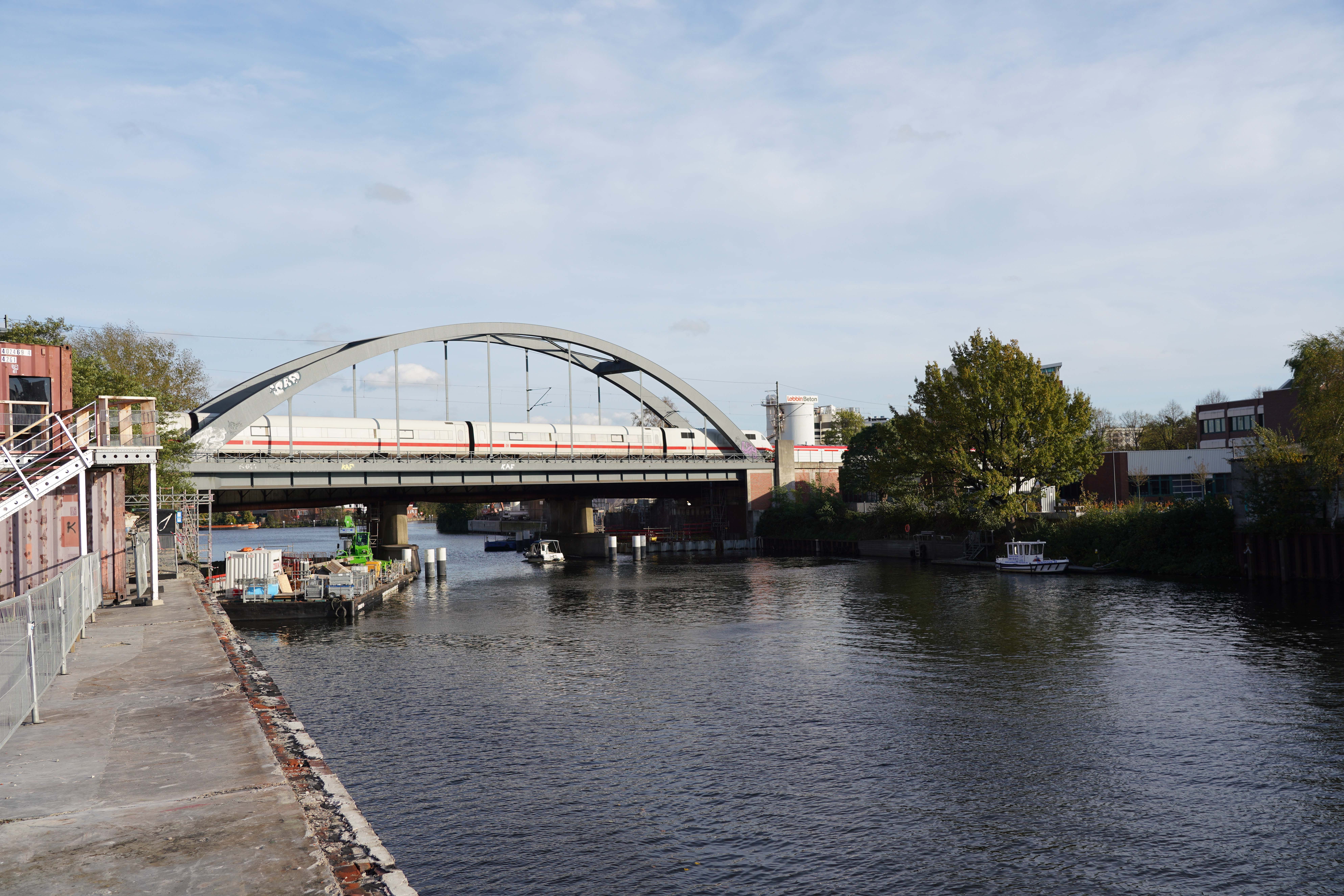
Thomas Hampel
Perfectly connected for companies
The expansion of footpaths and cycle paths in the district is combined with excellent logistical accessibility to the site.
The Billebecken is located in the immediate vicinity of two main roads, the Billhorner Brückenstraße (B75) and the Bergedorfer Straße (B5). In addition, private roads for heavy goods traffic are planned in the heart of the commercial district. They enable space-saving and flexible deliveries (see basic floor plans). This avoids maneuvering and reversing in public spaces. Company vehicles park in the private streets or private underground garages on the construction sites.
In the long term, transportation via water should also be possible. To this end, not every property will have individual water access. Instead, the aim is to create a so-called public extinguishing point that can be used flexibly. From here, it is then only a short distance via the public road network to the company's own premises.
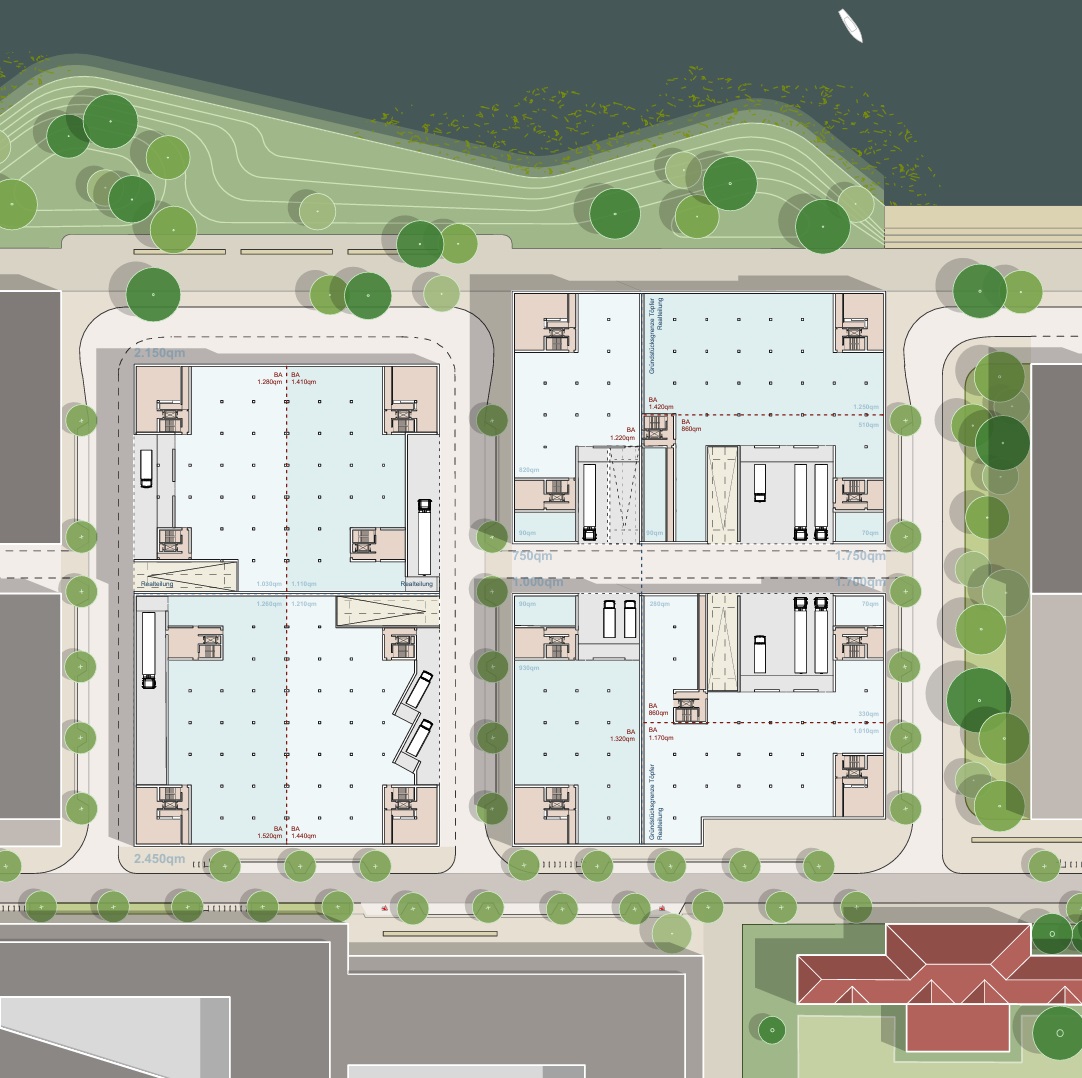
Basic principles...
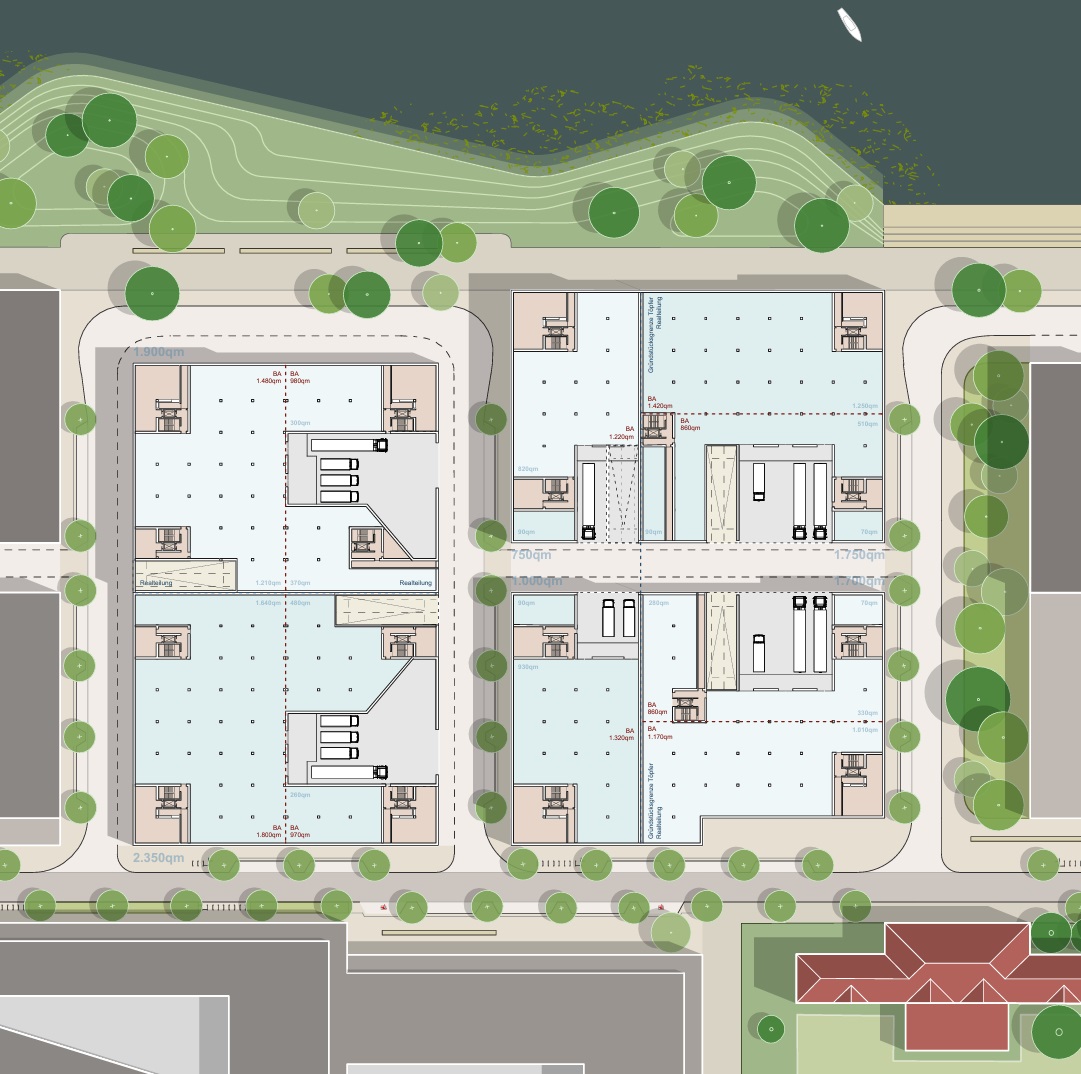
...with different delivery situations
© Billebogen Entwicklungsgesellschaft / Lorenzen Mayer Architects
Perfectly connected for employees
At just 3.5 km from Hamburg City Hall, the Billebecken is easily accessible by bike for many Hamburg residents. To this end, cycle paths inside and outside the district are gradually being upgraded and expanded.
Those coming from further afield can use public transport. The Billebecken is around a 10-minute walk from the barrier-free Rothenburgsort S-Bahn station. From here, Hamburg Central Station is just two stops away. The service is supplemented by various bus routes that stop directly in the district.
More information
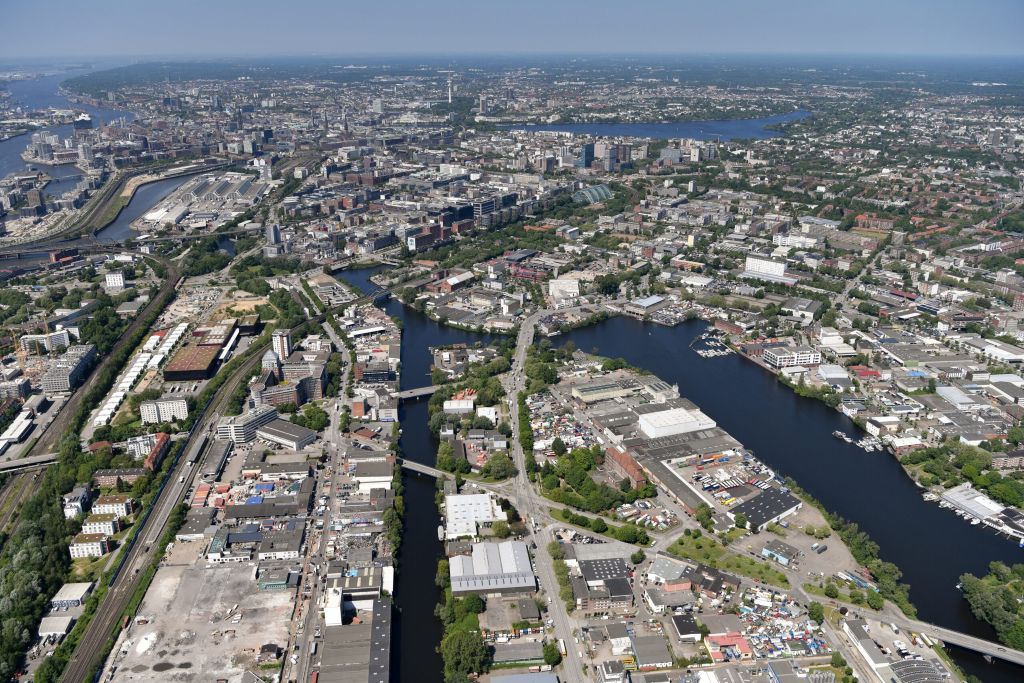
Real estate
Billebogen Entwicklungsgesellschaft (BBEG), a subsidiary of HafenCity Hamburg GmbH, has more than 20 years of experience in urban development. It offers attractive properties for investors and property developers in new, vibrant urban spaces with a focus on commercial development.
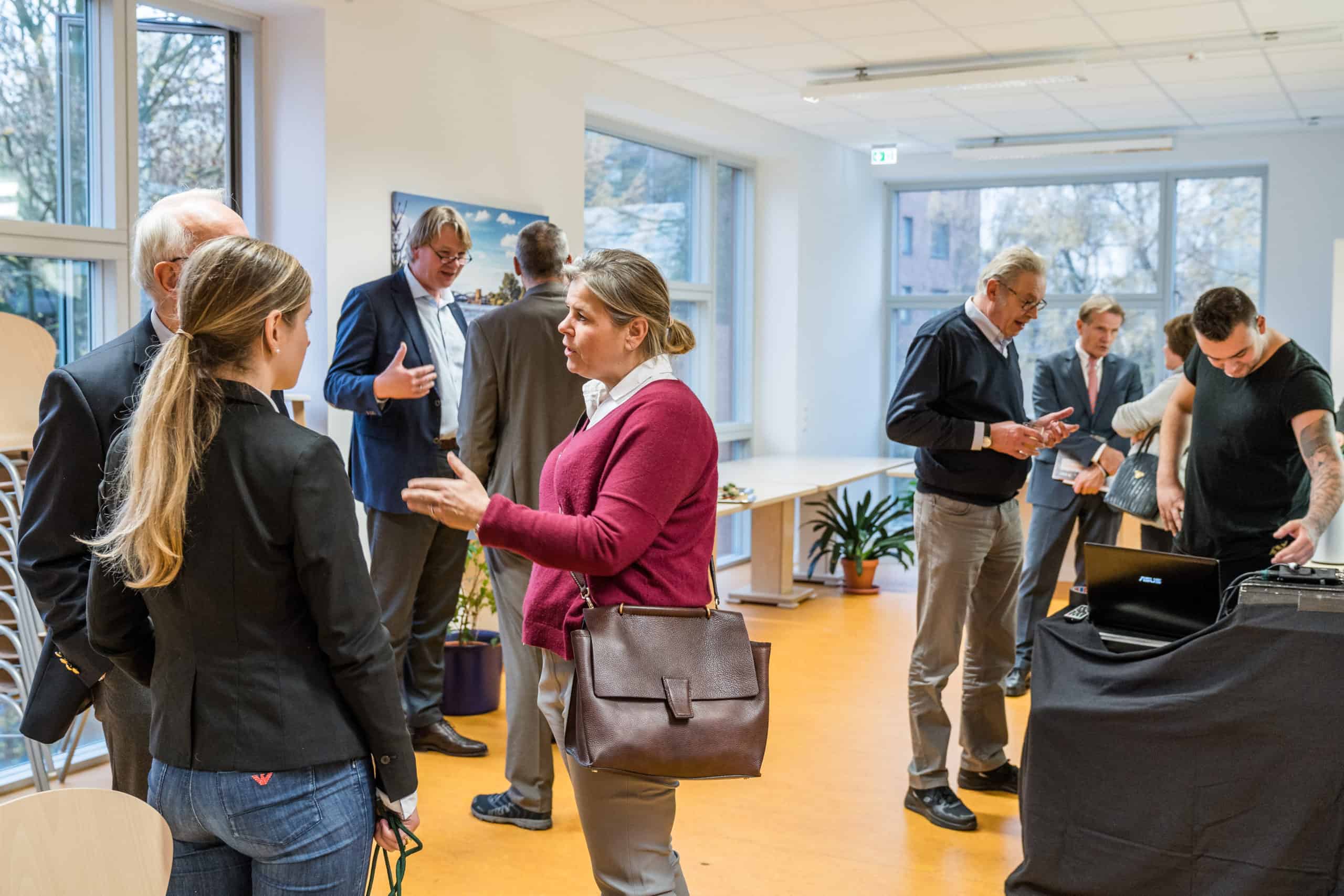
Participation
On behalf of the Free and Hanseatic City, Billebogen Entwicklungsgesellschaft (BBEG) is also responsible for communication on neighborhood development. Current issues are communicated transparently and suggestions and needs of the neighborhood can be brought forward in various formats. There are numerous opportunities for this.
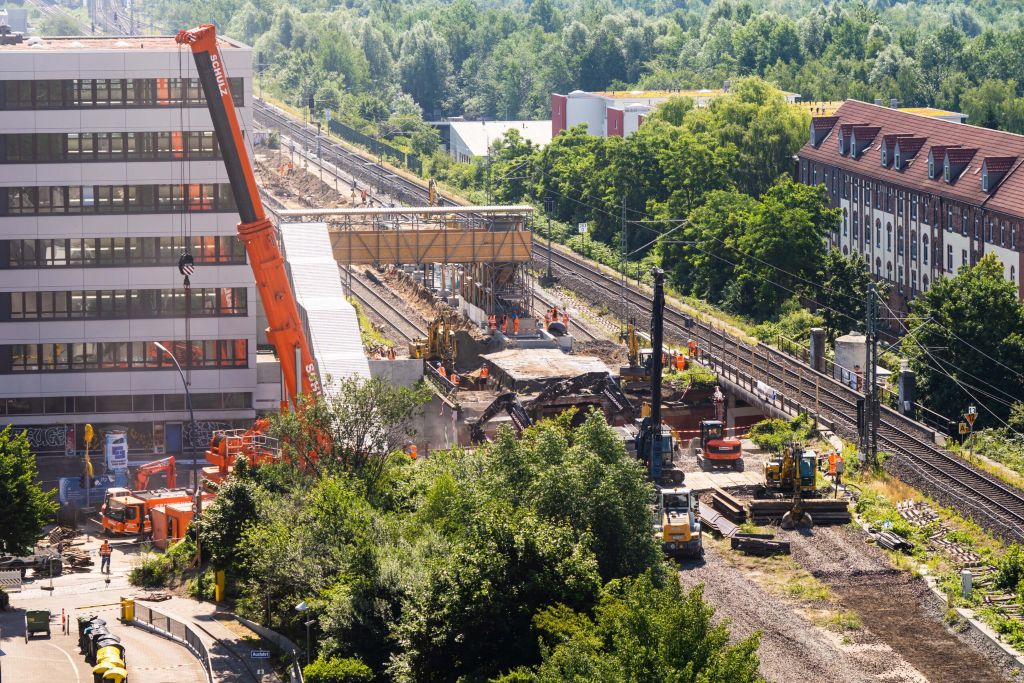
Construction activities
The Free and Hanseatic City of Hamburg is expected to invest around 250 million euros in the infrastructure of the new neighborhoods and the existing Rothenburgsort district via the Billebogen Entwicklungsgesellschaft (BBEG). Here you will find an overview of construction measures in the neighborhood.