

© Moka Studio
Stadteingang Elbbrücken
Diverse neighborhood on former street areas
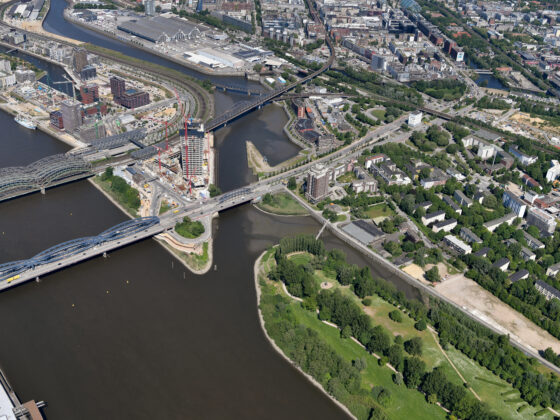
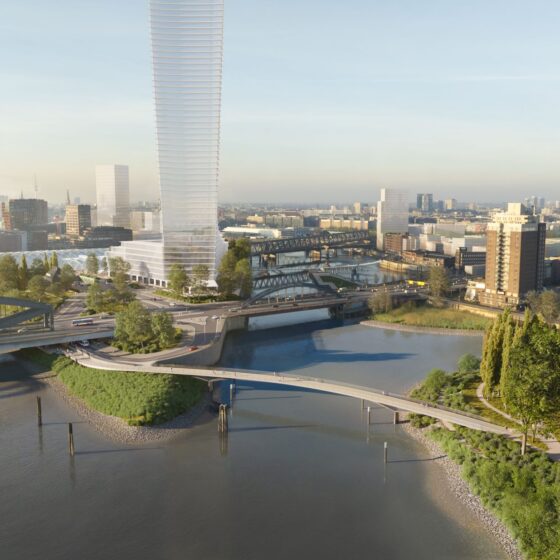
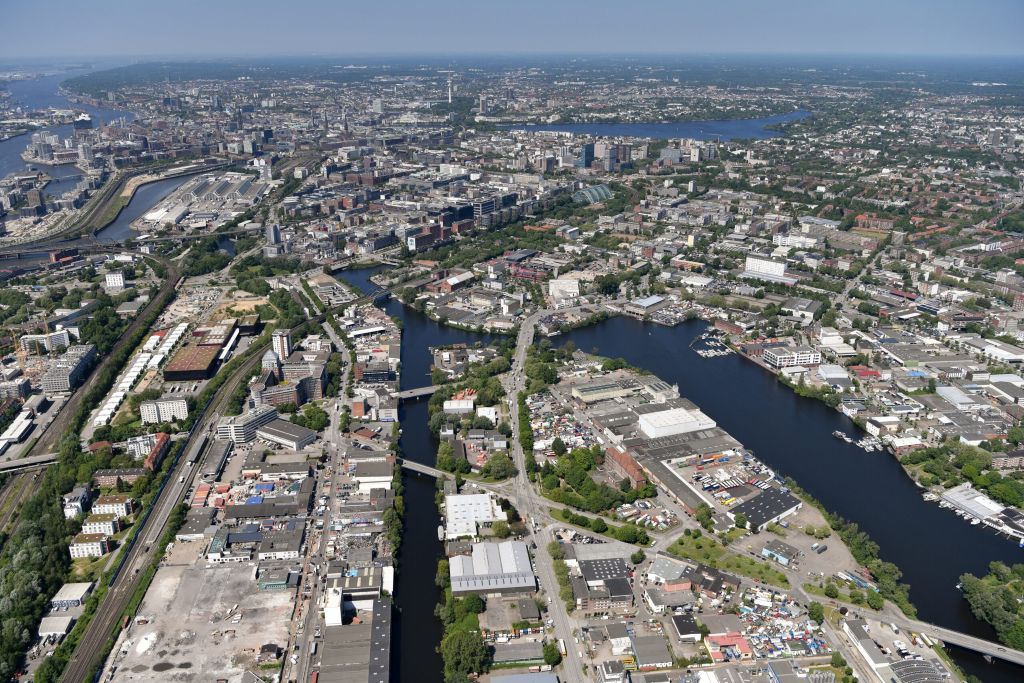
With the Elbbrücken Stadteingang , an urban business and residential district is being created on a former highway cloverleaf. New bridge connections for pedestrians and cyclists provide attractive access. Billhorner Brückenstraße, which runs through the middle of the quarter, is being reinvented as a prestigious main thoroughfare. Characterized by two parks and an overarching green corridor, theElbbrücken Stadteingang offers a high recreational and leisure value.
Current status of development
The development of the Elbbrücken Stadteingangs opens up a unique opportunity for urban renewal. However, extensive infrastructure work is required to prepare for this.
The development plan process is currently underway under the leadership of the Hamburg-Mitte district authority. The aim is to have preliminary approval ready by the end of 2028. On this basis, construction projects can be initiated before the development plan is finalized.
The Billebogen Entwicklungsgesellschaft (BBEG) is moderating the exchange between authorities, service providers and private owners in order to facilitate the complex conversion. Building development is expected to take place primarily in the 2030s.
Development concept
In 2021, the Elbbrücken Stadteingang framework plan was presented, which BBEG had developed together with the Hamburg-Mitte district office and the Ministry of Urban Development and Housing with public participation. In the comprehensive process, architects and open space planners worked together to identify the potential of the area. For the implementation, the offices of gmp Architekten, WES Landschaftsarchitektur, Hager Landschaftsarchitekten (now Uniola) and Argus Stadt und Verkehr developed the plans further.
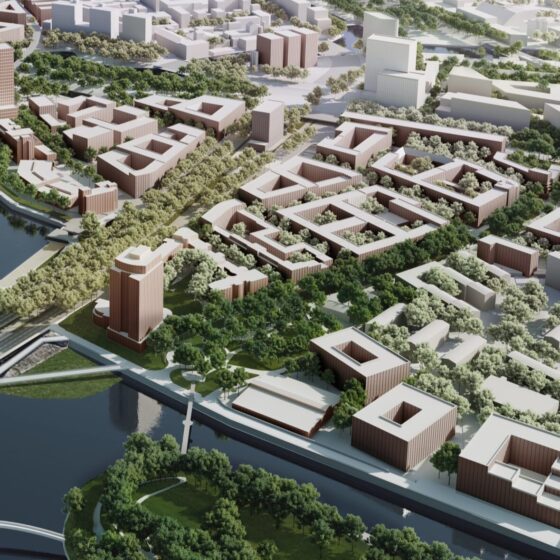
The Elbbrücken Stadteingang framework plan lays the foundations for a modern, urban development of this previously heavily fragmented urban space. It envisages a green belt from the Elbe to the Bille , including a new park. Additional path connections and new access to the water are also included. A wide variety of uses is planned for the districts: modern workplaces in offices, services and urban production as well as places for the creative industries. Residential space can also be created in suitable noise-protected locations.
Urban development
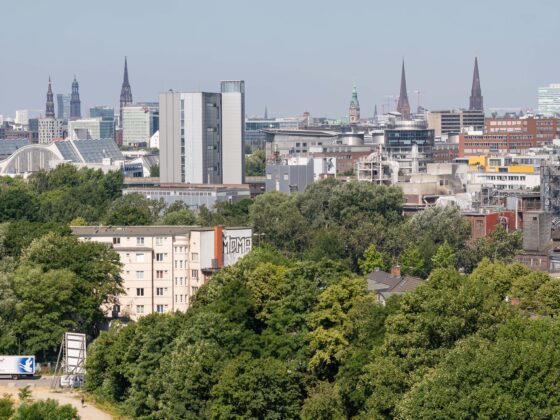
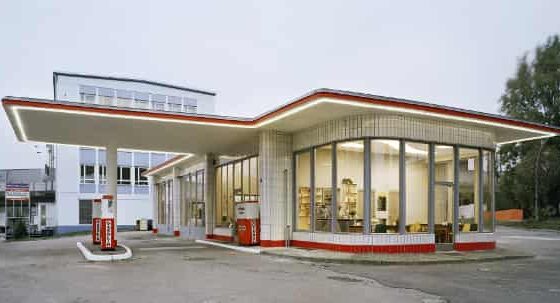
There are already exciting places to discover at the Elbbrücken Stadteingang : a listed petrol station as a classic car meeting place, an expressionist brick ensemble as a location for young gastronomy companies or a high-rise building in the middle of Billhorner Brückenstraße as a creative hot spot. The newly planned urban structures take up these impulses and develop them further. Based on the traditional block development of the old Rothenburgsort, the predominantly five- to six-storey buildings will house small production facilities, art and cultural projects as well as leisure facilities and hotels in addition to office space. In contrast to the other two districts in the Billebogen , housing is also possible at the Stadteingang . However, a prerequisite for the 500 or so residential units on the east side of Billhorner Brückenstraße is that the new buildings are provided with adequate noise protection (which must be created first). A diverse mix of uses is planned for the surrounding area on the first floors, with shopping facilities, restaurants and social infrastructure such as daycare centers, neighborhood meetings and advice centers.
© Moka Studio
More city instead of road
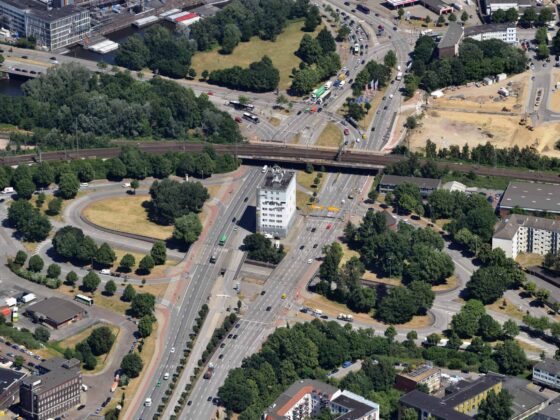
The starting point for the development is the dismantling of a large so-called highway cloverleaf. This was built in the 1960s between Billhorner Brückenstraße and Billhorner Röhrendamm . At that time, the plan was to route both roads through the city as highways.
However, these plans never came to fruition. Instead, the existing infrastructure is now oversized for actual use. While the existing underpass at Röhrendamm on Billhorner Brückenstraße is still needed, the four ramps can be reduced to two with new intersections along Billhörner Röhrendamm. A reorganization of the neighborhood’s traffic infrastructure would also allow for development along the ramps.
This will create a significant amount of building land in a central location. In addition, the Free and Hanseatic City of Hamburg plans to transform the Billhorner Brückenstraße into a prestigious thoroughfare. Thanks to the new development along the federal highway, noise-protected housing can be built within the neighborhoods of the “ Stadteingangs ”Elbbrücken . This also has the advantage of creating more building land. Consequently, it enables the infill development of already-used urban areas rather than the use of additional land.
Historical places in a new context
The dismantling of the highway cloverleaf not only gains building land, but also opens up the opportunity for urban renewal. Rothenburgsort had a different character before the Second World War. It was densely built-up and formed the multi-purpose entrance to the center of the Free and Hanseatic City. This character was lost with the destruction of the war.
The new development makes reference to the history and integrates the few existing historical buildings. These include the Brandshof ensemble at Billhafen and the residential buildings on Marckmannstraße and Hardenstrasse.
But the post-war period also remains visible. A single building now standing in the middle of Billhorner Brückenstraße , for example, was originally part of an entire block. Its isolated location will be improved in future by a pedestrian connection to Röhrendamm, but its individual presence in the street space will be retained. The vintage car filling station at the western end of Billhorner Röhrendamm will also be retained. In future, it will form a central point of contact in the newly planned Billepark.
© Moka Studio
Free space
The Elbbrücken Stadteingang is located in the immediate vicinity of the Elbe and the Bille with two spacious parks: the existing Elbpark Entenwerder and the new Billepark. There is also the AlsterElbe Alster and neighborhood squares.
Alster-Bille-Elbe-Grünzug
The Alster-Bille-Elbe-Grünzug links Rothenburgsort with the large parks of the city of Hamburg. In future, an urban park landscape will stretch between Hamburg's three rivers.
In Rothenburgsort , the green corridor runs from the flood basin on the Bille in the north to the Alexandrastieg at Elbpark Entenwerder in the south. Two new connections will make this possible: a bridge will be built over the Bille and a tunnel will be built under the railroad embankment to the south of the Neuer Huckepackbahnhof. Both are designed exclusively for pedestrians and cyclists.
Billhorner Mühlenweg in the Elbbrücken Stadteingang district is being rebuilt for the Elbe Alster. One of the two lanes will become a green space. An attractive town square is being created at the junction with Billhorner Röhrendamm . The potential of this location was discussed with citizens as part of the "Post-Corona-Stadt" project led by the Department for Urban Development and Housing.
In the ensemble of the former spirits monopoly administration, district-related and cultural uses are to further enliven the Elbe Alster. A district center in the Alexandrastieg park area is already being planned.
Two large parks: Elbpark Entenwerder and Billepark
Anyone who lives near a green park in a large city will particularly appreciate this. Residents in the newElbbrücken Stadteingang quarter will have two parks to choose from in future.
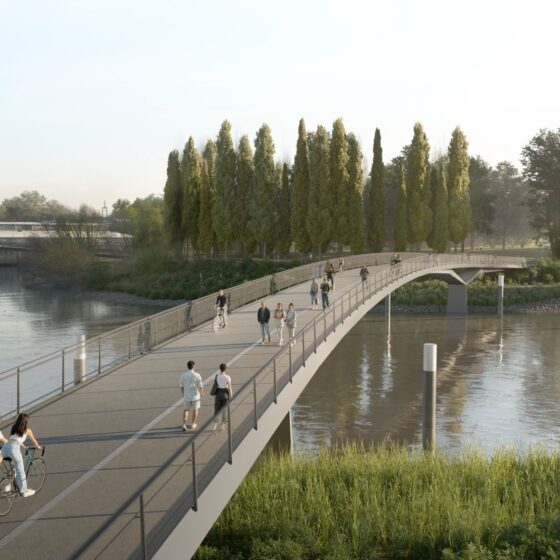
Entenwerder Elbpark has been around for over 25 years. It was developed from a former customs station for inland waterway vessels, which later served simply as a storage area. With views of the Elbbrücken, the growing HafenCity, and the industrial backdrop on the southern bank of the Elbe, expansive green spaces and open areas stretch out right along the Elbe. A new bridge for pedestrians and cyclists will connect the Elbpark Entenwerder to HafenCity. The bridge was completed in mid-2026.
© Moka Studio
© bloomimages
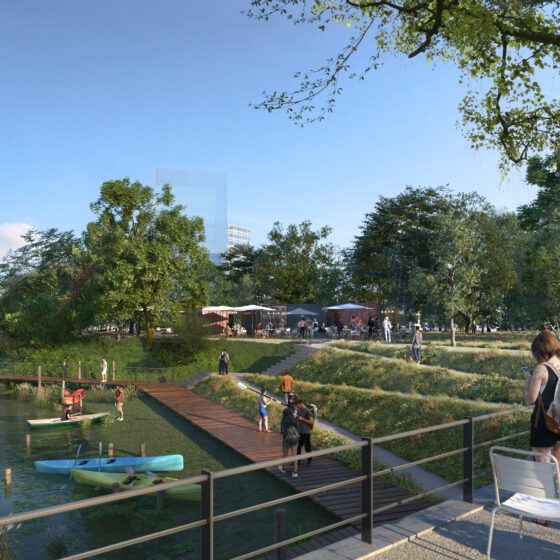
On the western side of the Stadteingang , the Bille flows first into the Oberhafenkanal and then the Elbe. Another green space is being created here: the Billepark, which is being created by linking and redesigning previously little-used, separate green spaces along the Bille .
This park will extend from the mouth of the Bille to the flood basin at the entrance to the Bille basin in the north. It will make the course of the Bille river accessible to the public and create further attractive path connections and new opportunities for use - often right by the water. For example, the functional planning includes a jetty leading from Heidenkampsweg, past Amsinckstraße and the wholesale market, to the Brandshofer Schleuse
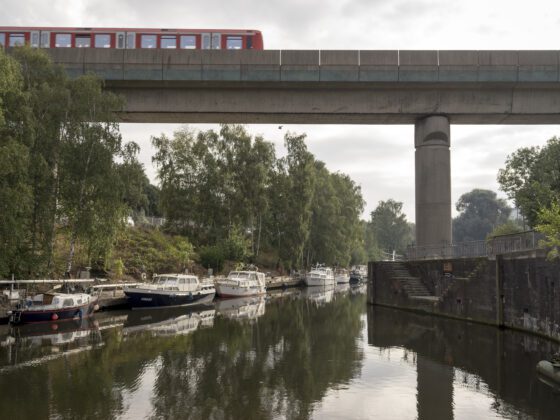
At the Elbbrücken Stadteingang , Billepark is characterized by bridges, locks, railroad facilities and existing buildings. A multifaceted design concept creates the conditions for linking the existing locations and integrating new uses. The existing vintage car filling station at the Brandshofer Schleuse will also be retained and the existing water sports use will be integrated in the best possible way.
The realization of Billepark is planned for the early 2030s.
New neighborhood squares
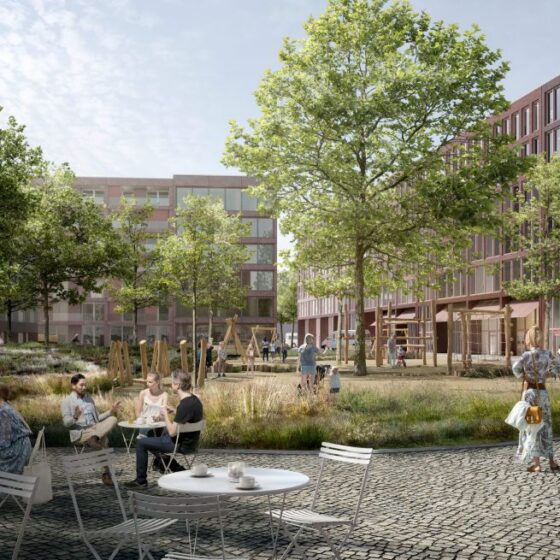
Many areas at the Stadteingang Elbbrücken convey a sense of space - be it the large parks, the main thoroughfare Billhorner Brückenstraße or the water areas. As a counterpoint, dense residential and commercial neighborhoods are emerging, in which more intimate neighborhood squares can be found. Protected from noise, they also offer excellent amenity qualities - for example for commercial areas, outdoor restaurants or playgrounds.
Mobility and logistics
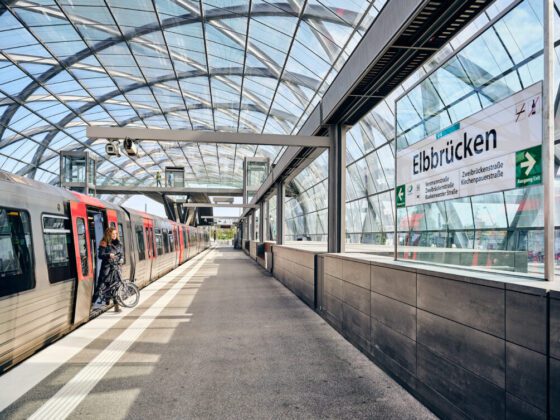
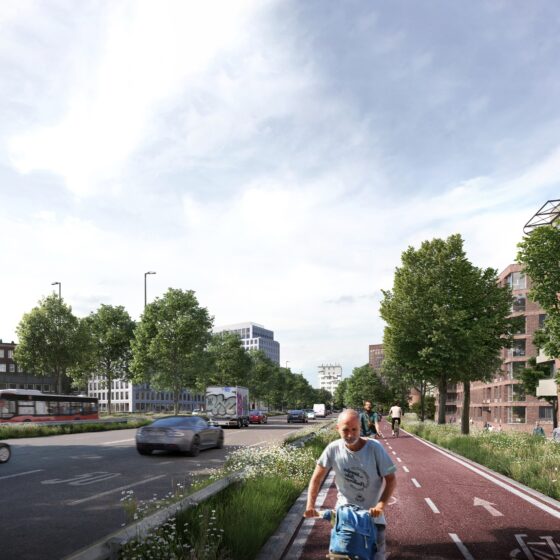
Twelve main traffic axes connect Hamburg's inner city with the outer districts and the neighboring metropolitan region. One of these is the Billhorner Brückenstraße in the center of the Elbbrücken Stadteingangs . As part of the district development and the "Masterplan Magistralen" of the Ministry of Urban Development and Housing, the Billhorner Brückenstraße is being rethought. However, important components of a sustainable mobility space already exist today: the Elbbrücken transport hub with its combined underground and suburban train station is now more accessible for cyclists and pedestrians thanks to a new bridge.
© bloomimages
From an urban highway to a main thoroughfare
Across the water, under the railroad tracks, and past commercial and multi-story residential buildings—on its route from downtown toward the harbor, the “ Billhorner Brückenstraße ” leaves hardly any urban space untouched. It’s clear that the section between Amsinckstraße and Elbbrücken , in the neighborhoods of Neuer ,Huckepackbahnhof , and Stadteingang ,Elbbrücken , will continue to be heavily dominated by car traffic. Nevertheless, the mobility transition will be felt here as well in the future. In the area of the oversized highway interchange—which is being removed to make way for neighborhood development—traffic will be reorganized to benefit the neighborhood. Car and bus traffic will be reorganized. Parking areas will be optimized and partially relocated to underground or neighborhood garages. A large portion of today’s street space will be repurposed in the future—whether for buildings and neighborhood squares, future green spaces, or a network of paths for pedestrians and cyclists.
© Moka Studio
New bridges to the Elbbrücken underground and S-Bahn station
In 2018, a new subway station opened at the “ Elbbrücken ,” and a new S-Bahn stop was added in late 2019: For more than five years now, this transportation hub has offered highly attractive public transit options. Already today, the “ Stadteingang ”Elbbrücken and the entire neighborhood Rothenburgsort are connected to the station Elbbrücken via bus routes. In the future, there will be two direct connections for pedestrians and cyclists: The bridge Entenwerder leads from the park of the same name across the mouth of the Oberhafen Canal into HafenCity. With a sweeping and dynamic design, the 138-meter-long and approximately 7-meter-wide bridge spans the water on two piers, with a clear span of 75 meters between them. A two-way bike path and a pedestrian walkway run across the bridge. Rest areas are planned at the bridgeheads. In the 2020 design competition, the team of schlaich bergermann partner , in collaboration with gmp Architekten andvon Gerkan, Marg und Partner , was selected to design the bridge. The bridge opened in mid-2026.
A second bridge over the Billhafen links the future Billepark and the area around the Brandshof with the Elbbrücken underground and S-Bahn station.
More information
Real estate
Billebogen Entwicklungsgesellschaft (BBEG), a subsidiary of HafenCity Hamburg GmbH, has more than 20 years of experience in urban development. It offers attractive properties for investors and property developers in new, vibrant urban spaces with a focus on commercial development.
Participation
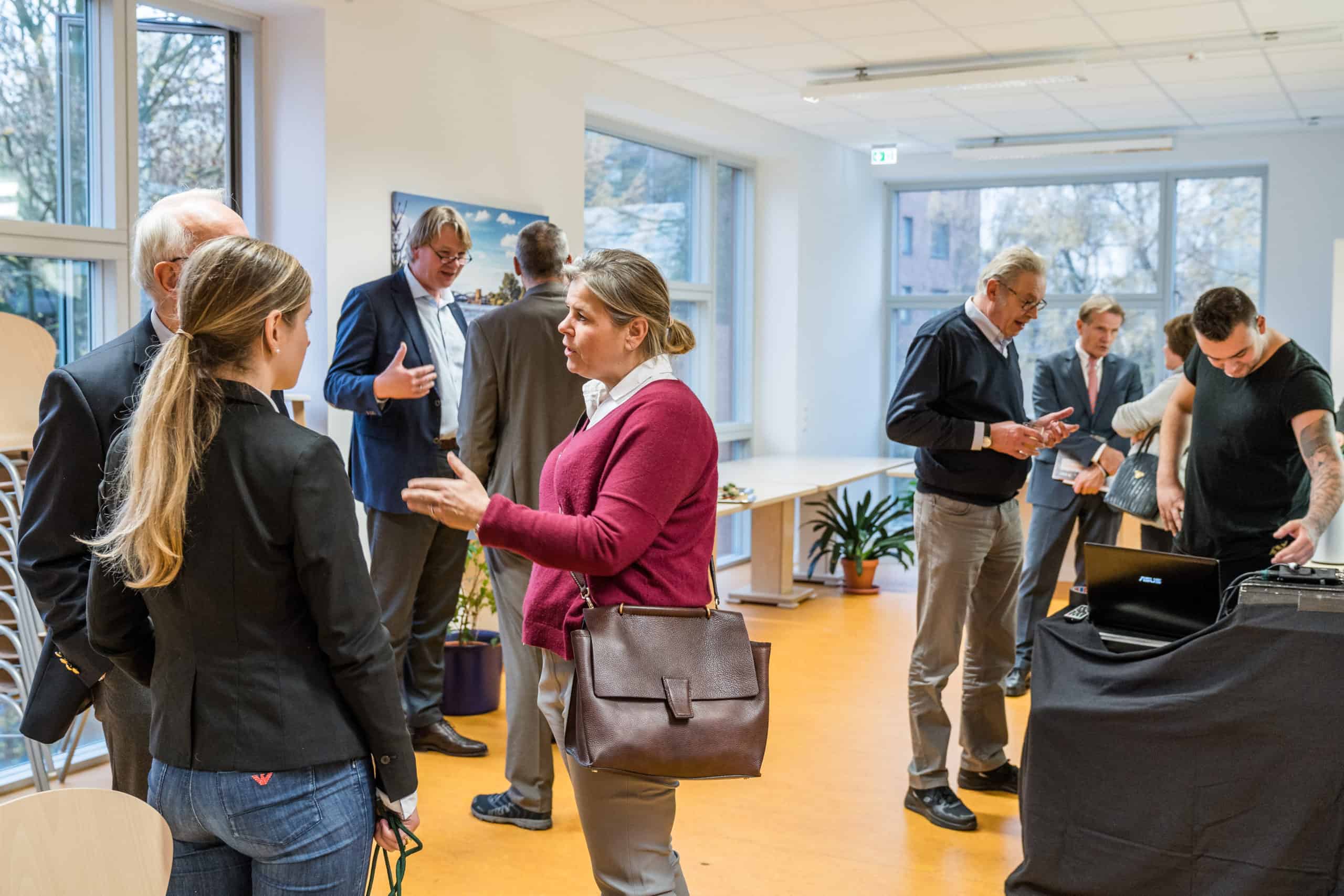
On behalf of the Free and Hanseatic City, Billebogen Entwicklungsgesellschaft (BBEG) is also responsible for communication on neighborhood development. Current issues are communicated transparently and suggestions and needs of the neighborhood can be brought forward in various formats. There are numerous opportunities for this.
Construction activities
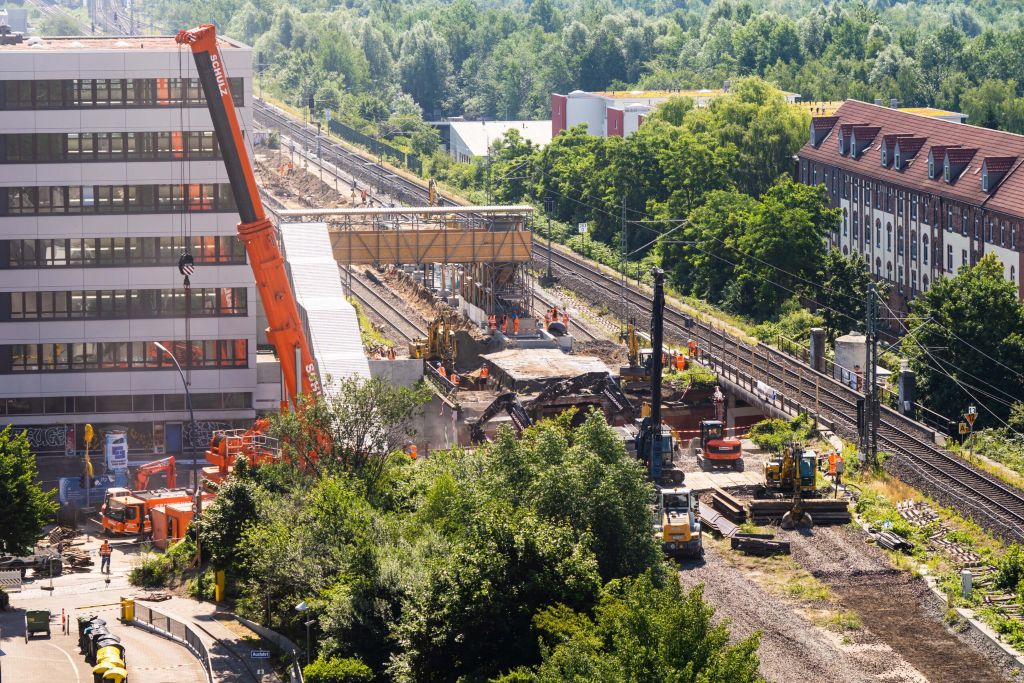
The Free and Hanseatic City of Hamburg is expected to invest around 250 million euros in the infrastructure of the new neighborhoods and the existing Rothenburgsort district via the Billebogen Entwicklungsgesellschaft (BBEG). Here you will find an overview of construction measures in the neighborhood.